
CORE DECOMPRESSION
Hip Core Decompression
An opportunity to preserve your own hip before significant femoral head collapse.
When might this be considered?
Imaging identifies the location, extent and stage of the affected bone.
Usually considered for early-stage disease when joint preservation remains possible.
The decision depends on lesion size, symptoms and overall suitability.
How is the surgery performed?
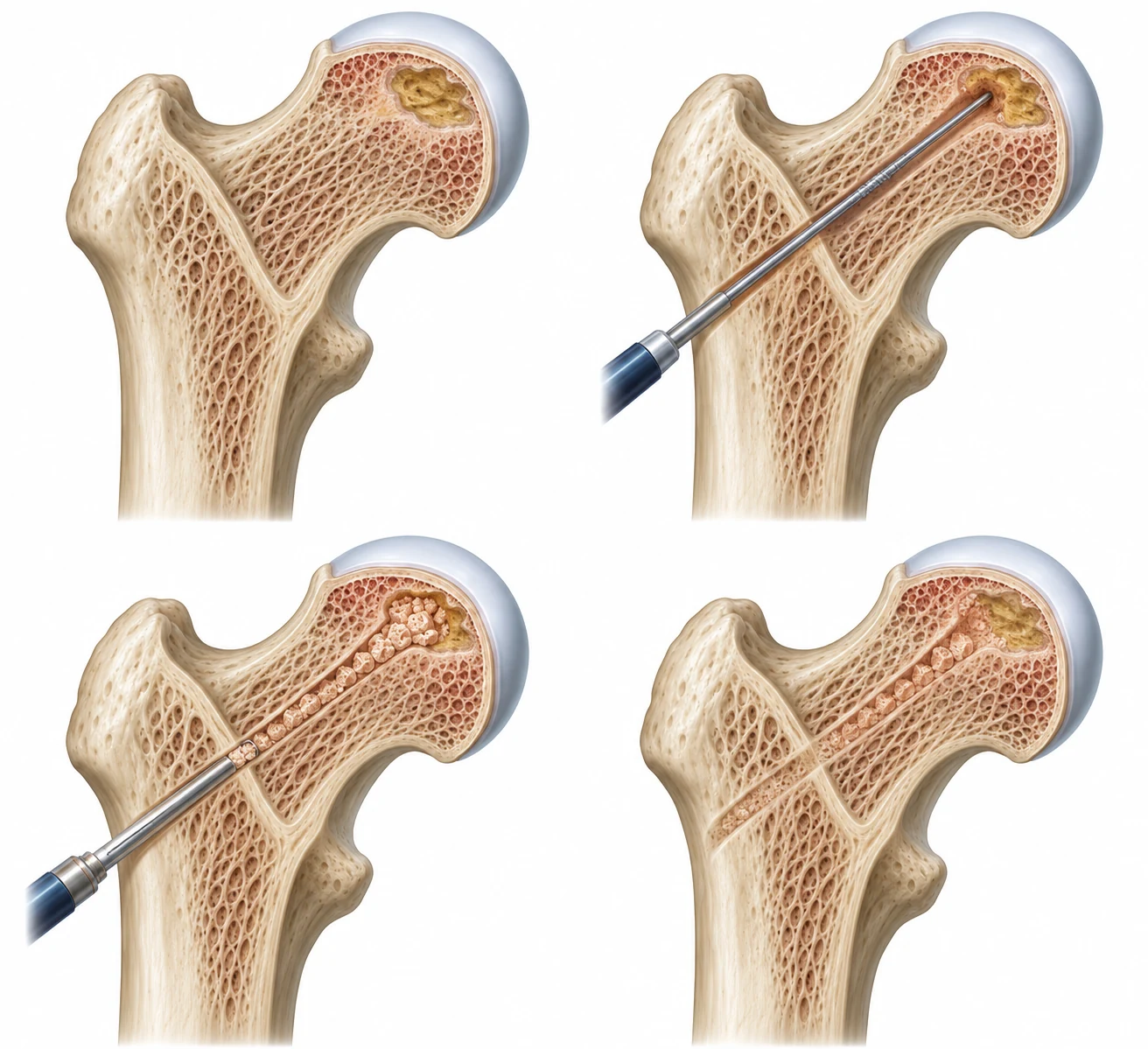
Locate the affected bone
Imaging and intraoperative guidance are used to plan the path to the lesion.
Create a decompression channel
A channel is drilled from the outer femur into the lesion to reduce pressure within the bone.
Bone grafting when indicated
Bone grafting may be added depending on lesion size and bone condition.
Monitor the native joint
The femoral head is preserved while symptoms and imaging changes are monitored.
AI-assisted illustrations show a simplified surgical sequence, not actual surgery. Procedures, instruments and implants vary with each patient’s condition.
The native femoral head and joint surface are retained, with decompression and bone grafting planned according to the lesion.
Ongoing assessment monitors the femoral head. Activity and weight-bearing are tailored to your condition and follow-up findings.
WATCH & UNDERSTAND
Patient education video
Hip core decompression
You can read the illustrated guide above while the video is being prepared.
Explore the video library →Patient education video coming here soon.
Core decompression and hip replacement: different roles
| Treatment | Main goal | Common indications |
|---|---|---|
| Core decompression | Aim to preserve your own femoral head. | Early avascular necrosis without significant collapse. |
| Joint replacement | Replace damaged joint surfaces with an artificial joint. | Significant collapse or joint damage, with pain affecting everyday life. |
Decompression cannot guarantee that avascular necrosis will stop progressing. Some patients may later need hip replacement.
Ongoing support through recovery
- Wound and symptom careGuidance on wound monitoring, medicines and when to contact your medical team.
- Activity matched to your progressOngoing assessment monitors the femoral head. Activity and weight-bearing are tailored to your condition and follow-up findings.
- Follow-up and your next stepsCare and training are adjusted using examination results and your everyday goals.
Questions you may have
Does everyone need bone grafting?
No. Whether to add a graft, and which technique to use, depends on the lesion, bone quality and surgical assessment.
What are the risks and limitations?
Possible problems include infection, fracture or persistent symptoms. The femoral head can continue to collapse despite surgery.
Find the treatment that fits your needs
Bring your symptoms, imaging and everyday goals to discuss with Dr. Chen.
References
This page provides general patient education. Treatment, surgery time and care arrangements are determined through individual clinical assessment.