
BONE HEALTH · OSTEOPOROSIS
Osteoporosis Assessment & Treatment
Protect bone strength, reduce fractures, and move with greater confidence.
Osteoporosis weakens bones and often causes no early symptoms. The hip, spine and wrist are common fracture sites. Assessment may be needed even without pain.
When should you discuss assessment?
A low-trauma fracture, loss of height, a stooped posture or new back pain deserves attention.
Risk increases after menopause and with older age, low body weight or a family history of hip fracture.
Long-term glucocorticoid use and some illnesses affect bone health. Bring your medication list.
Your assessment and treatment journey
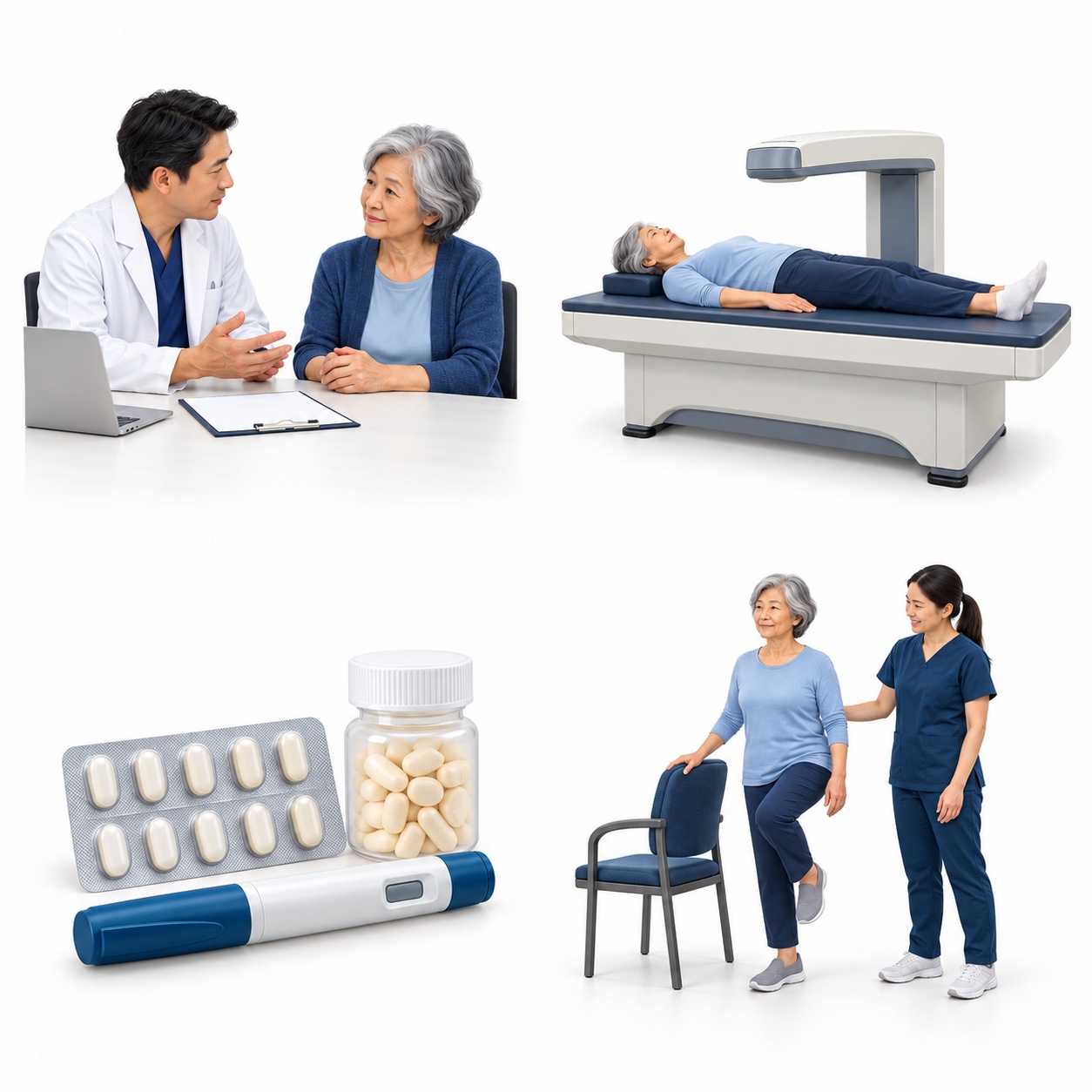
Review fracture risk
Discuss fractures, falls, medicines and family history. FRAX may help assess risk.
Measure bone density
DXA usually measures the hip and spine. Blood tests or other imaging may help investigate causes.
Choose care together
Discuss nutrition, activity and medicines based on fracture risk, kidney function and overall health.
Follow up and prevent falls
Review treatment and bone density, with appropriate strength, balance and home-safety measures.
Simplified AI-assisted illustrations, not photographs of Dr. Chen or actual patients. Equipment, medicines and exercise plans vary with individual assessment.
Identify bone loss and discuss treatment according to your fracture risk.
Review medicines, falls and daily-life changes to adjust your care plan together.
How do treatment options differ?
Nutrition and activity
Calcium, vitamin D and protein support bone health. Exercise intensity should match your fracture risk.
Medicines that slow bone loss
Options include bisphosphonates and denosumab. Suitability and oral or injection routes depend on your health.
Bone-building medicines
Teriparatide or romosozumab may be considered for selected people at very high fracture risk, with follow-on treatment planned.
Calcium alone does not replace osteoporosis treatment when medication is needed. Do not stop or delay prescribed treatment on your own, especially denosumab; discuss a transition plan first.
Three everyday steps for bone health
- Eat well; supplement appropriatelyPrioritize dietary nutrition. Discuss calcium and vitamin D supplements based on your intake and test results.
- Build strength and balanceChoose suitable weight-bearing, resistance and balance exercises. Seek assessment first if you have a fracture or significant pain.
- Make your home saferImprove lighting, remove trip hazards and use bathroom slip protection. Review vision, footwear and medicines that may cause dizziness.
Common questions
Does osteoporosis always cause pain?
No. It often has no early symptoms. New back pain, height loss or a fracture after minor trauma should be assessed.
Does the bone density number determine treatment?
It is only part of the picture. In postmenopausal women and men aged 50 or older, a T-score of −2.5 or below is in the osteoporosis range. A low-trauma hip or spine fracture may warrant treatment even above this threshold.
Does osteoporosis require surgery?
Osteoporosis itself is usually managed with medicines and lifestyle care. A fracture may require surgery depending on its site, stability and your health.
Should I mention osteoporosis treatment before hip or knee surgery?
Yes. Bring your bone density report, fracture history and full medication list so your surgeon can plan your bone and joint care together.
Seek urgent care if a fall leaves you unable to stand, causes severe hip pain, or if new back pain is accompanied by leg weakness.
Protect your bones. Keep living your life.
Bring your bone density report, fracture history and medication list to discuss with Dr. Chen.
References
Updated: 21 October 2026. General patient education; diagnosis, medicines and testing depend on an individual clinical assessment.